

The Mediterranean is home to the sweetly scented perennial herb, lavender. Think the south of France!
A perennial herb, lavender matures to a shrub in its third year.
Due to the high oil content of the foliage and flowers, the deer and bunnies tend to avoid eating lavender.
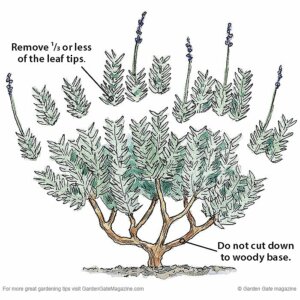 In our USDA Planting Zone of 7b in central North Carolina, pruning begins in mid-February (think Valentine’s Day as a reminder). For those gardening in other zones, wait to prune the lavender until after the coldest part of winter.
If lavender plants have received an annual trim, snip away about 1/3 of the soft green foliage, leaving at least 2-3 inches of green leaves, guarding against trimming into the woody parts of the plant. You want to trim the plant neatly to resemble a rounded boxwood.
If the lavender has gone several years without pruning and looking overgrown, spend the time to check for decaying woody stems, remove them and carefully shape the plant. Again, the rule of thumb is to leave at least 2-3 inches of soft green foliage on the plant. It may take several attempts to rejuvenate your lavender plant, or it just might be time to install a new one. Pruning is essential to gorgeous and productive lavender.
Use any kind of shearing tool that you’re comfortable with. Weed eaters, hedge trimmers, hand tools and even kitchen scissors work just fine.
Don’t discard the trimmings! Use them around “deer candy” flowers, shrubs and trees in your yard, tie them up, open a window and place the trimmings on the windowsill or toss them on the grill as a layer between the grill surface and the produce or protein you’re preparing to eat. The taste is subtle and oh so delicious!
Likely, the plant is stressed due to root rot. There’s too much moisture in the soil.
Potential solutions:
- Cut away dead material in April or May in southern gardens once new green foliage has started to emerge to clean up the lavender plants.
- Scatter stone or pebbles around the base of the plant.
- Push the stone into the soil and aerate the soil at the same time by pushing the prongs of a garden fork around the drip line of the plant.
- Yes. Follow the same instructions for planting lavender in containers. Be sure to know the mature diameter of the lavender and choose an appropriate container. Remember that lavender is shallow rooted, so the pot does not need to be a tall one. Average depth and spread of the root system is 8-10 inches.
- Excellent drainage is key to success with lavender be it in the ground or in a pot. The pot will need to be watered more frequently in the heat of the summer as they dry out quickly. This could mean nearly every day in July.
- Keep in mind that lavender prefers to live in the garden or in a pot outdoors. Requiring significant sunlight, it is nearly impossible for them to thrive as a houseplant. So, it is best to find a sunny, well-draining location in the garden, or a pot, for your lavender.
- Temperatures are 15 degrees colder above the ground than in the ground. With this in mind, protect the pots by wrapping them or covering the plants when the temperatures are below freezing.
No. 6 hours of bright sunlight is required for lavender to thrive.
Growing plants is best. Seed is about 15% viable. With weeks and weeks of patience (like up to 6 months), a packet of seeds may result in a few plants.
Please don’t! The lavender plant will die. Lavender does not spread like some perennials do.
Remember – Hot, Dry and High! Lavender appreciates reflective light.
- Southwestern exposure
- Slopes, banks or raised beds
- Pool side
- Along a roadway or sidewalk
- Foundation of brick or stone wall
Your plant may look like it’s dead. What time of year is it? Here’s what you can expect your lavender to look like throughout the seasons:
Winter: Lavender may or may not still have its foliage from the previous year. Lavender is dormant once freezing temperatures begin in the fall (October / November) until they end in spring (April) Lavender foliage can turn gray / green and even bronze colored. Depending on the amount of cold and moisture, your lavender plants may lose some foliage. Some leaf loss is expected in southern gardens due to the humidity.
Spring: New green emerges in April, once the garden is experiencing consistent temperatures in the 80’s. Patience please. Wait until Memorial Day to pull out your lavender plant!. Not native.
Summer: Lavender varieties that grow in southern gardens bloom from the end of May, throughout June and some into early July, predominantly. You may get sporadic blooms until freezing temperatures in the fall.
Fall: Lavender foliage remains green and lush.